

Renault Kwid EV Brazil: What’s New with the E-Tech Version
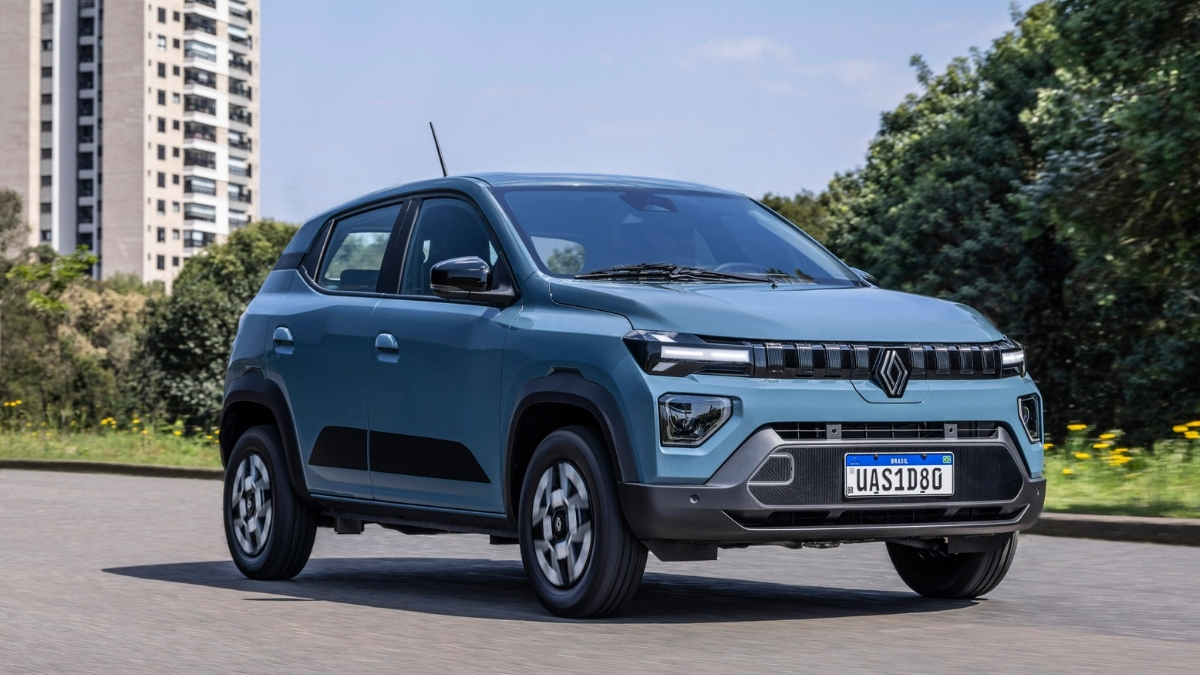
Renault has unveiled the Renault Kwid EV Brazil E-Tech in Brazil, delivering an updated electric hatchback aimed at city drivers who want modern tech, safety, and respectable range without premium pricing.
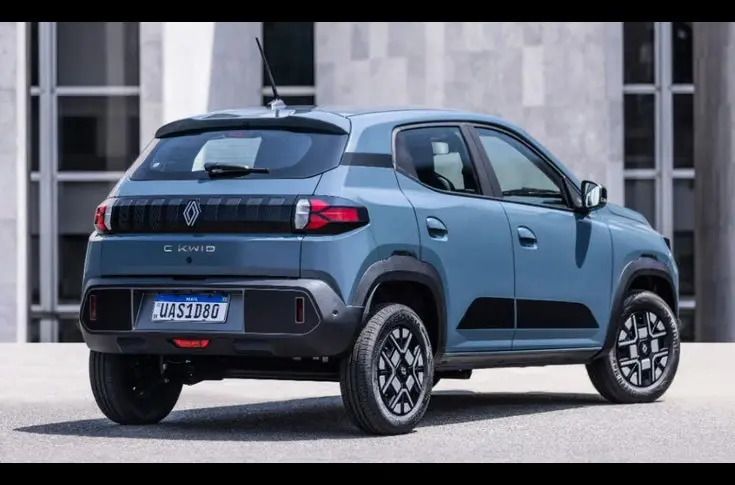
Although some reports mention range up to ~225-298 km under Brazil’s mixed or urban cycles, Saudi-style or WLTP standards sometimes bring the number down. In particular variants, Renault quotes 180 km claimed range for certain trims or operating conditions.
Let’s dive into what this edition offers spec-wise, what works well, where the trade-offs are, and what potential buyers should watch out for.
📋 Technical Spec Chart: Renault Kwid EV Brazil E-Tech
Here’s a table summarizing key specifications of Renault Kwid EV Brazil:
| Specification | Detail |
|---|---|
| Battery Pack | 26.8 kWh lithium-ion battery |
| Motor Output | ~48 kW / ~65 PS motor; torque ~113 Nm (varies by trim) |
| Claimed Range | ~180 km in certain conditions; up to ~265 km mixed / 298 km urban in top variants in Brazil’s standards |
| Acceleration | 0-50 km/h in ~4.1 seconds; 0-100 km/h in ~14.6 seconds |
| Top Speed | ~130 km/h (Brazil spec) |
| Charging | AC (7.4-kW wall box) takes ~2h 54 min (15-80%); DC fast charger (30 kW) 15-80% in ~40 minutes |
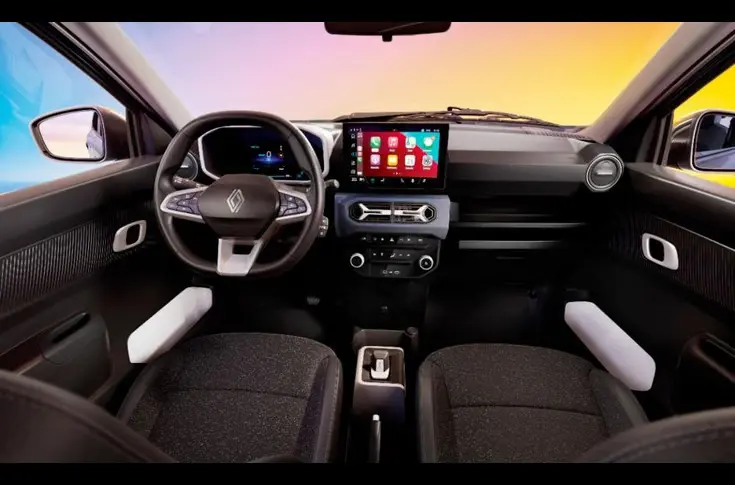
| Infotainment / Cabin | 10.1-inch touchscreen with wireless Android Auto / Apple CarPlay, 7-inch digital instrument cluster, two USB-C ports, height-adjustable steering wheel, console e-shifter |
| Safety & Driver Aids | Level-1 ADAS with ~11 driver assist features, six airbags, ABS + EBD, ESP, hill-start assist, ISOFIX, rear-view camera, TPMS etc. |
| Boot Space | ~290 litres |
| Price (Brazil) | ~BRL 99,990 (~₹16 lakh equivalent) |
🔍 What Makes the Kwid E-Tech Stand Out
Here are the highlights of the Renault Kwid EV Brazil that make it appealing:
-
Feature-rich for its class: Wireless Android Auto / CarPlay, a good infotainment setup, digital cluster, USB-C ports — things many EVs in this price band may lack. Source
-
Decent charging flexibility: Fast DC charging helps reduce long waits; AC wall-box options work for home charging.
-
Good urban / mixed cycle range: While 298 km in urban usage is optimistic, having ~180 km usable range in many daily conditions is practical.
-
Safety equipment: 6 airbags + ADAS level-1 is above what many city-EVs offer in emerging markets.
-
Price positioning: At BRL ~99,990, it’s not “cheap,” but it positions itself well among Brazilian EV offerings for someone wanting a compact EV with good tech & usage.
⚠ Trade-Offs & What to Be Careful About
No model is perfect. Here are the trade-offs or limitations to bear in mind:
-
Real-world range will be lower than claimed urban or “ideal” ranges — climate, AC use, driving style, traffic will reduce it.
-
Charging infrastructure availability: DC fast chargers may be less common in smaller towns; waiting times may be long during peak usage.
-
Performance is modest: 0-100 takes ~14.6 seconds — not sporty, more functional.
-
Features may vary by trim: Some trims may omit portions of the touted tech or safety features to hit cost targets.
-
Import / localization (if launched in other countries) could affect price and after-sales costs.
🌍 What It Suggests for Wider Markets (Including India)
-
India could get similar model: There are reports of Renault Kwid EV Brazil/ K-ZE electric prototypes, and Renault showing interest in EVs for small-car markets. CARS24
-
If launched in India, expect a more modest price, possibly a smaller battery or fewer features, to hit cost targets.
-
Claimed “180-km range” variants could be those trimmed for more affordability; higher trims will offer more.
-
Buyers in India will need to evaluate after-sales support, charging availability, battery warranty etc.
Also read: https://grandautoworld.com/suzuki-working-on-burgman-hydrogen-scooter/
🤔 FAQs: What Buyers Ask
Q1. Is 180 km claimed range enough for Indian city driving?
Yes—it’s sufficient for daily city use, commutes, errands. For highway or intercity, you’ll need more. But for many buyers, 180 km is practical.
Q2. Will Renault Kwid EV Brazil E-Tech launch in India?
Renault hasn’t officially confirmed full launch dates as of latest reports. There are test mules spotted in India, which suggests it may come in future.
Q3. What will its price likely be in India?
It’s speculative, but likely lower than Brazil’s BRL 99,990 (₹16 lakh approx), especially if localized and with specific cost controls. Could be targeted between ~₹8–12 lakh depending on variant.
Q4. How safe is it compared to ICE versions?
Quite safe—6 airbags, ABS with EBD, ESP, ISOFIX etc. match or exceed many hatchbacks. ADAS level-1 adds modern safety assistance.
Q5. How fast can it charge?
With a 30 kW DC fast charger: ~15-80% in about 40 minutes; with AC wall box (~7-kW), ~2 hrs 50-55 minutes for similar SoC.
✅ Final Thoughts: Is Kwid E-Tech a Game Changer?
The Renault Kwid EV Brazil E-Tech strikes a compelling balance: it’s not premium in performance, but it is strong in value, practicality and tech. The “180 km claimed range” variants make it usable for city dwellers, and the suite of safety & connectivity features add real appeal.
If Renault brings a similar version to India (or similar markets), it could reshape expectations for entry-level EVs—giving buyers a sensible EV with features, safety, and decent range without paying for luxury or performance beyond necessity.
For anyone considering switching to an EV and mostly using it for city duties, the Renault Kwid EV Brazil with 180 km claimed range offers a strong proposition.
Suzuki Working on Burgman Hydrogen Scooter — A Revolution on Two Wheels